
A few years ago, “IoT in fleet management” mostly meant sticking a GPS tracker on a truck and watching a dot move across a map. That was the pitch at trade shows, and honestly, that was about as deep as most implementations went.
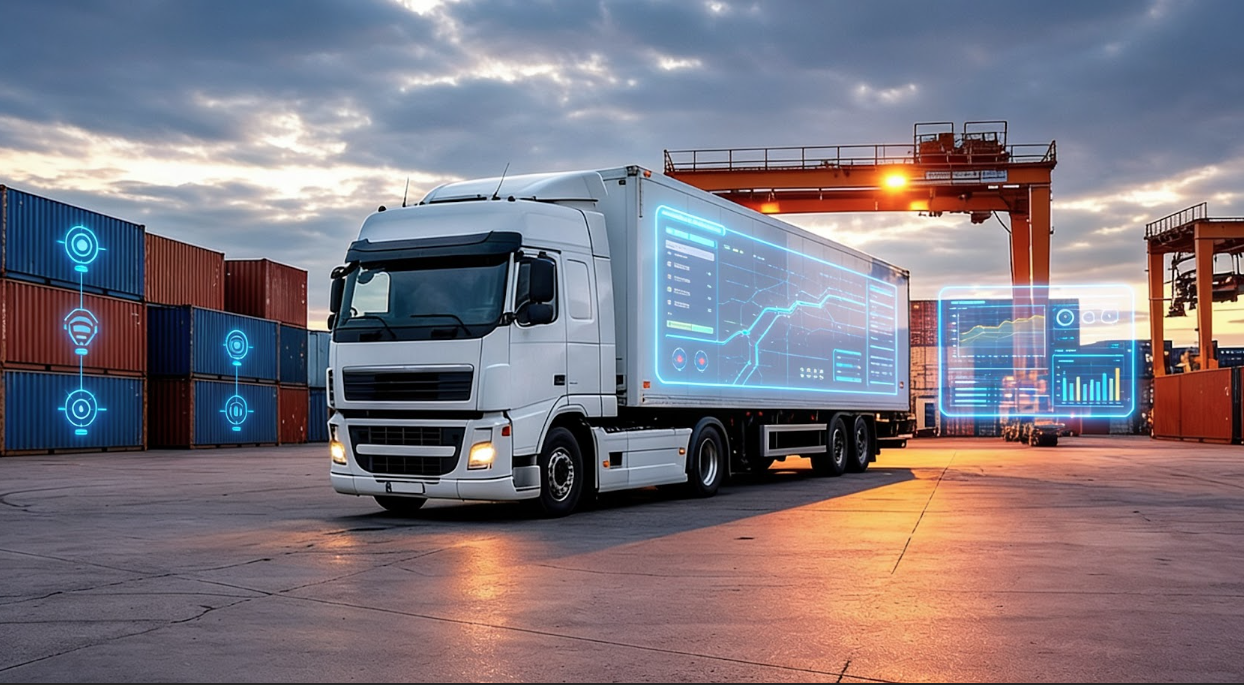
2026 looks nothing like that. IoT in commercial vehicles has gone from tracking location to tracking everything: engine health, tire pressure, fuel burn rate, braking patterns, battery degradation, coolant flow, exhaust composition. And not just collecting this data, but actually doing something useful with it in real time. The gap between fleets using modern IoT and fleets still running on GPS-and-spreadsheets is getting uncomfortable.
Let me walk through what’s actually different now.
The sensors were always there. The intelligence wasn’t.
Modern commercial vehicles already come loaded with sensors. A typical heavy-duty truck has 50 to 100 electronic control units generating data constantly. The problem was never a lack of data. It was that nobody could process it fast enough to make it useful.
Older telematics systems would pull a snapshot every few minutes, upload it to a server, and generate a report you’d look at next Tuesday. By the time you noticed something wrong, the vehicle was already in the shop or on the shoulder of a highway.
What IoT platforms do now is fundamentally different. They stream data continuously, analyze it against known failure patterns, and push alerts to fleet managers before problems turn into breakdowns. Intangles built their entire platform around this idea. Their system pulls live data from the vehicle’s onboard diagnostics, runs it through AI models trained on millions of miles of vehicle behavior, and flags anomalies while there’s still time to act. It’s the difference between a weather forecast and getting rained on.
What’s actually changing in 2026
Three things have converged this year that make IoT-based fleet management meaningfully better than even two years ago.
Vehicle-to-cloud connectivity got faster and cheaper. 5G and improved LTE coverage mean vehicles can stream high-frequency data without the latency and cost issues that plagued earlier systems. A truck in rural Kansas can now push engine diagnostics as reliably as one in downtown Chicago. That wasn’t true in 2023.
AI models have more training data. The accuracy of predictive models depends on how much failure data they’ve seen. Platforms like Intangles that have been collecting vehicle data across thousands of commercial vehicles for years now have enough data for their models to catch subtle degradation patterns that would’ve been missed earlier. More data means fewer false alarms and more genuine early warnings.
Fleet managers are actually ready to use it. This is the underrated part. The technology was ahead of adoption for a while. Fleet managers who tried early IoT platforms in 2020 or 2021 often got burned by clunky dashboards, constant false alerts, and systems that created more work than they saved. The platforms that survived have gotten much better at delivering information in a way that fits how fleet ops teams actually work. Short, clear, actionable alerts. Not 47-page PDF reports.
Where IoT is having the most impact right now
I keep coming back to four areas where the difference between IoT-equipped fleets and traditional ones is most obvious:
Predictive maintenance. This is the headline use case, and for good reason. When your IoT platform can tell you that Vehicle #62’s turbocharger is showing early signs of failure, and you can schedule a shop visit for Saturday instead of dealing with a roadside breakdown on Wednesday, the cost difference is enormous. Intangles’ predictive maintenance system does exactly this, catching degradation patterns before standard fault codes even trigger.
Fuel management. This one surprises people. Fuel runs 30-40% of total fleet operating cost, and most managers assume they’ve already optimized it. They haven’t. IoT sensors tracking fuel injection patterns, idling time, route efficiency, and driving behavior regularly find 8-12% in wasted fuel that nobody knew about. On a 200-truck fleet, that’s real money.
Driver behavior and safety. IoT data on harsh braking, rapid acceleration, cornering speed, and seatbelt usage gives fleet managers an objective picture of how their drivers actually operate. Not what the driver says happened, but what the vehicle recorded. Intangles processes this data in real time and generates driver scoring that helps managers coach specific behaviors instead of giving vague “drive safer” warnings.
Compliance and reporting. Hours-of-service tracking, emissions data, DVIR submissions. All of this used to be manual paperwork that someone hated doing and occasionally got wrong. IoT automates the collection, and in many cases the filing too. It’s not the flashiest use case, but it’s the one that saves your office team the most headaches.
The parts people don’t talk about enough
IoT in fleet management isn’t all smooth sailing. There are real friction points that vendors don’t always highlight.
Data security matters. Your vehicles are now generating and transmitting sensitive operational data constantly. Who has access? Where is it stored? What happens during a breach? These aren’t hypothetical questions anymore. If your IoT provider can’t clearly explain their data security architecture, that’s a red flag.
Not every platform works the same way. Some require proprietary hardware on every vehicle. Others, like Intangles, work through the vehicle’s existing OBD systems without additional devices. The difference in deployment cost and complexity is significant, especially for fleets scaling from 50 to 500 vehicles.
Alert fatigue is real. A poorly tuned IoT system will send so many notifications that your maintenance team starts ignoring all of them. The platforms that work are the ones that have learned to separate “check this within a week” from “pull this truck off the road today.” That calibration takes good AI and a lot of real-world data.
Frequently asked questions
What is IoT in fleet management?
IoT (Internet of Things) in fleet management refers to connected sensors and onboard systems in commercial vehicles that collect and transmit real-time operational data. This includes engine diagnostics, fuel consumption, tire pressure, driver behavior, and GPS location. Platforms like Intangles use this data with AI analysis to provide fleet managers with actionable alerts on vehicle health, maintenance needs, and operational efficiency rather than just raw numbers on a dashboard.
How does IoT reduce fleet maintenance costs?
IoT reduces maintenance costs by enabling condition-based and predictive maintenance instead of fixed-schedule servicing. Sensors monitor actual component wear in real time, so parts get replaced when they need replacing, not on arbitrary mileage intervals. Intangles’ AI models detect early degradation patterns and alert fleet managers before failures occur, which means repairs happen in a shop during planned downtime instead of on the roadside during a delivery. Fleets using this approach typically see 25-35% fewer unplanned breakdowns.
What vehicle data can IoT sensors track in real time?
Modern IoT fleet platforms track dozens of parameters simultaneously: engine temperature, oil pressure, battery voltage, coolant flow, transmission behavior, fuel injection patterns, exhaust readings, tire pressure, braking force, and acceleration patterns. Intangles pulls this data through the vehicle’s standard OBD port without requiring additional hardware, which keeps deployment simple across large fleets. The data gets analyzed continuously, not in periodic snapshots.
Is IoT fleet management only for large fleets?
No. While enterprise fleets were early adopters, IoT fleet management has become accessible for mid-size operations with 30 to 100 vehicles. The cost of connectivity has dropped significantly, and platforms like Intangles that don’t require proprietary hardware on each vehicle have lowered the barrier further. The per-vehicle ROI actually tends to be more visible in mid-size fleets because each unplanned breakdown has a proportionally larger impact on operations.
How does IoT improve driver safety in commercial fleets?
IoT systems monitor driving behavior metrics like harsh braking frequency, rapid acceleration, cornering speed, speeding incidents, and seatbelt usage. This data creates an objective record of how each driver operates the vehicle. Intangles processes this information in real time to generate driver safety scores, allowing fleet managers to identify high-risk patterns and coach specific drivers on specific behaviors rather than relying on generic safety training that may not address actual problems.